Shooting Unsane
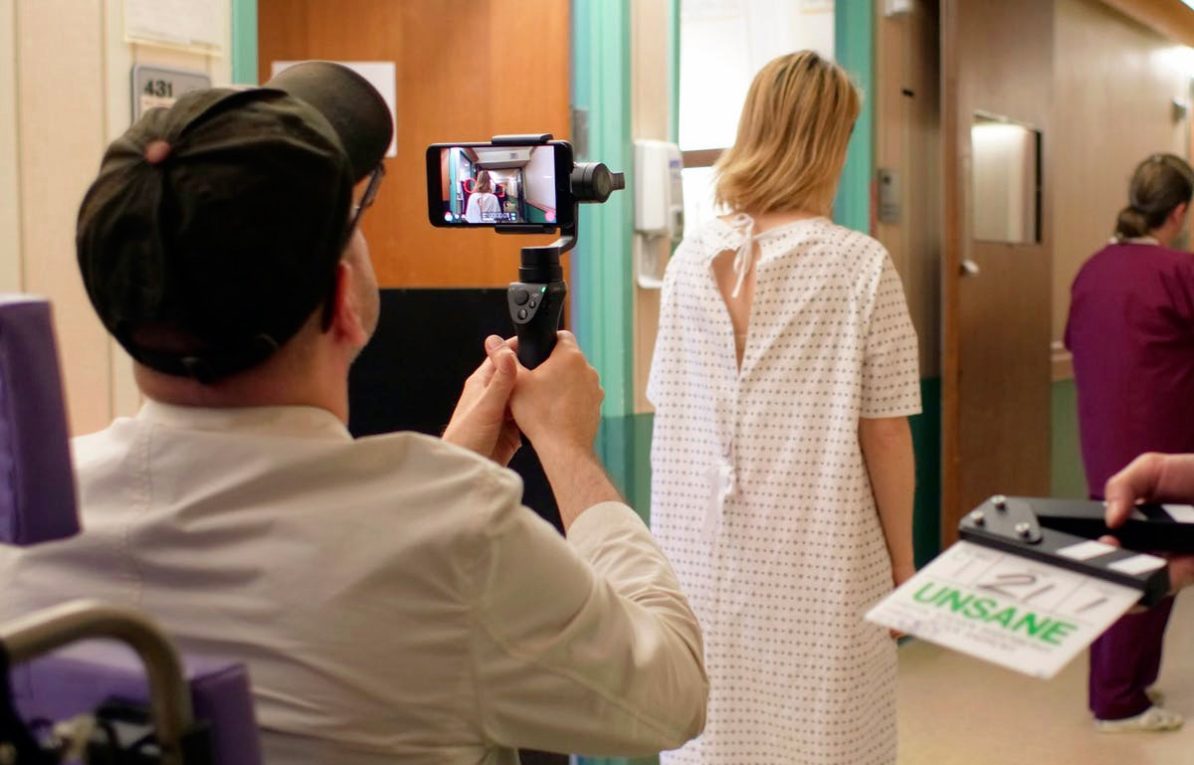
Inverse published this write-up on Steven Soderbergh’s use of an iPhone 7 Plus to shoot his latest feature, the psychological thriller Unsane. The article itself is a little lean on details and generally goes over the advantages of shooting with the smartphone such as the portability and reduction in time from creative impulse to execution. However, the article does detail he utilized 18mm, 60mm and fisheye lenses from Moment on three iPhones.
I personally utilize the 16mm and 60mm lenses for Indievisual related photography such as covering the Osaka Asian Film Festival. In 2017 I brought both my iPhone & Moment lenses in addition to my Nikon D90 with 50mm prime lens to cover the event. I found lugging the DSLR both unwieldly to use at the spur of the moment and burdensome when not in use. Had a brought my 18mm-105mm lens for wide and telephoto situations, the nuisance would have been doubled. This year, I only took my iPhone and Moment lenses which completely changed my experience. While I am still mastering the subtleties of each lens as well as the Moment app (which I hear will be undergoing drastic improvements soon), I was very satisfied with the photos I took of the event, the people, as well as Osaka while doing some sightseeing. More importantly, as the article mentions, the immediacy provided by the small footprint of the iPhone made shooting Q&A sessions as well as candid shots much easier. It’s also interesting to note how people tend to react to cameras pointed in there (general) direction. A DSLR or similar camera is usually met with suspicion followed by aversion–sometimes anger. People seem to be more accepting or at least unaffected by mobile phone cameras taking pictures in their vicinity thus making candid shots easier to take.
Of course, a DSLR will produce far higher spec results, but the point of the matter is the quality difference on the web is practically neglible. As I have already begun shooting portraits of people featured in the magazine with the iPhone, the DSLR is hardley ever touched these days. I’ll keep it for particular situations, but ultimately, I want to take my proficiency with Moment lenses to a level people will begin taking notice.
By the way, the folks at Moment seem to be taking iPhone cinematography quite seriously and have initiated a new Kickstarter campaign to help fund production of their new anamorphic lens. If you’re interested, take a look at the amazing results in the below video, then back the project (it met it’s funding goal in 41 minutes!!). I certainly don’t regret doing so to acquire my lenses.
Unsane making-of image via Fingerprint Releasing / Bleecker Street
Artsy
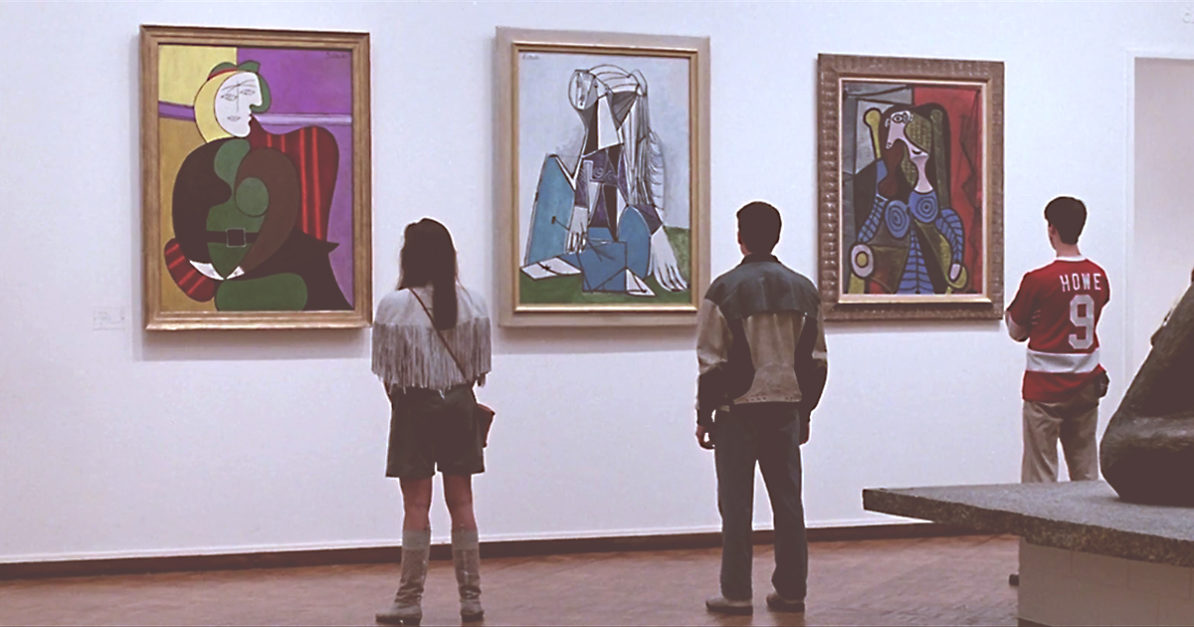
Providing proof of the power of SEO and the interesting connections the internet can sometimes produce, I was contacted by Rebecca from a site called Artsy after her research into Henri Rousseau resulted in her finding my interview with Ogata Takaomi which features a brief mention of Rousseau’s work from which Ogata drew inspiration for his film The Hungry Lion.
Since Indievisual is a site focused on Japanese indie filmmakers, I actually did not feel linking to Artsy on the site itself as an additional resource as per Rebecca’s kind request was within Indievisual’s brand mission. However, I certainly think they are worth mentioning in a special blog post since propagating the links between our sites could only be mutually beneficial. And in fact, I had found an image of Rousseau’s ‘The Hungry Lion Throws Itself on the Antelope’ on their Henri Rosseau page first before selecting the National Gallery of Art link for its inclusion of a detailed explanation about the painting. But revisiting their Henri Rosseau page, it’s clear Artsy is not just a top-notch source for artwork imagery, but also information about the artists, the galleries from which the images are sourced, related artists either by style or time period, showings of artists’ works and much more. Their mission is to create an online platform for both the appreciation and further discovery of classic and contemporary art. It’s even possible to build a collection of favorite images or even the artwork themselves through their partnership with galleries, museums, and institutions which allows art collectors to find for-sale work and make direct inquiries.
In a way, both our sites having taken different paths to achieve something similar: a further appreciation of artistic works and the people who make them. If your interest in art extends beyond cinema, Artsy is worth bookmarking. Thank you Rebecca for bringing your site to my attention.
Image from Ferris Bueller’s Day Off (Paramount Pictures)
Furuta Wataru & Shiozaki Shohei and the Egyptian
Fun Fact!
Did you know two of my interviewees actually have a shared history?
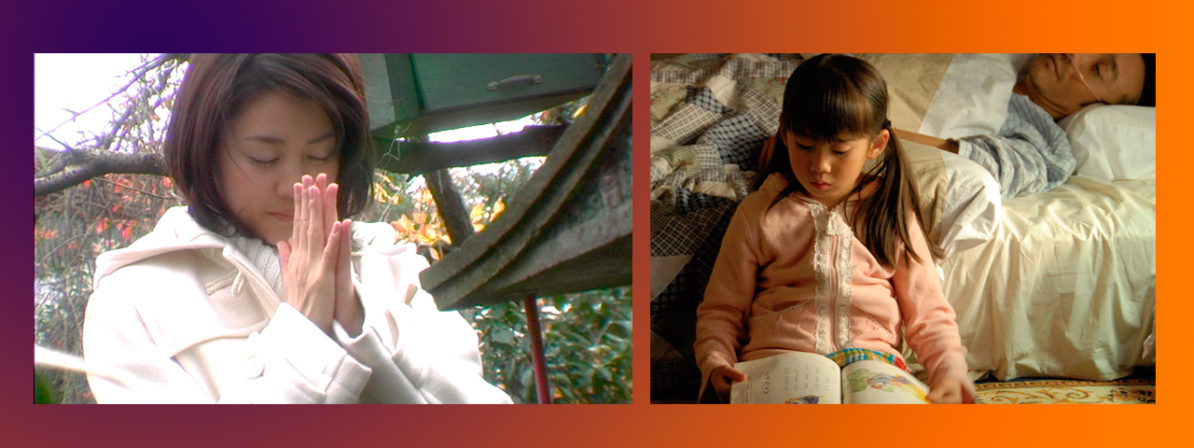
In my latest interview with Furuta Wataru, I ask him about his short movie Confession which won the Special Jury Prize at the 2008 “Picture Battle x Show Biz Japan” competition held at the Egyptian Theater in Hollywood, and was praised by jury foreman Izutsu Kazuyuki. The Grand Prize winner, the “survivor” by “process of elimination” according to Izutsu, was The Errand directed by Shiozaki Shohei. Yes, the 100 Meter Films director whose interview I published very early on.
I’ve known both men for a while, but it was only through researching their histories separately that I discovered they had been at the same competition, and were both award-winners praised by Izutsu. I intentionally edited out mention of the Picture Battle x Show Biz Japan competition from Shiozaki’s interview at publication knowing I could use this bit of trivia as a way to re-promote their respective interviews. However, a part of me thinks leaving it up to you readers to notice might have also been a fun idea.
How to Maintain an Indie Production Team
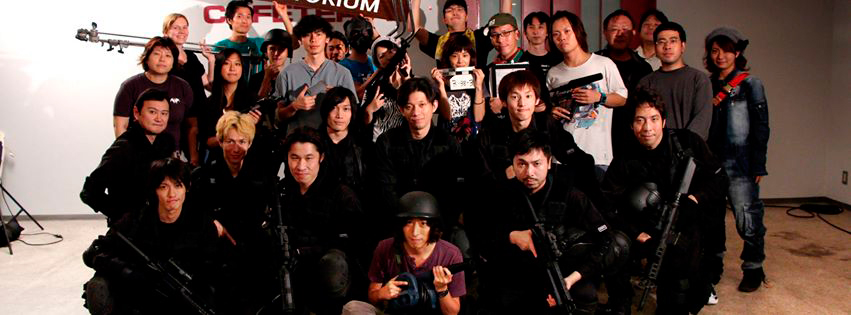
Yamagishi Kentaro is an independent filmmaker who has made a small number of action-oriented genre movies which have won various awards and played at festivals both at home and abroad. His most notable achievement is directing the short, Tokyo Mukokuseki Shojo which Oshii Mamoru remade into the feature-length Nowhere Girl–one of the very rare times that I am aware of an independent short being adapted to a feature in Japan. Yamagishi posted an interesting commentary on his Facebook page regarding what it takes to keep an independent filmmaking team together. His thoughts both echoes what most express as the appeal of the indie movie set, while also presenting an interesting wrinkle in those notions which I thought was interesting. Therefore, with Yamagishi’s permission I am publishing his post here in English:
I was asked, “What’s the trick to keeping an independent movie team together for a long time?” I replied, “Don’t have commercial movies call on you,” which was met with a wry grin. Now I, too, have finally made my commercial feature-length debut.
[…]
To answer that question seriously, the secret to perpetuating an independent team is to not accept actors into the team. To do so is to begin utilizing them as filmmaking crew. The actors vow to help in return for casting them, but that vested interest doesn’t positively affect either the movie or the relationships between the crew. If they want to be a crew member, that’s what they should do. Project Yamaken (Yamagishi’s production team) has consistently declined team involvement of actors ever since Kiyoku Dorobo. As far as the exception to that rule, actors have joined under the condition of working as a dedicated member behind the scenes and not appearing in front of the camera.Helping out means getting cast in the movie. Being cast in the movie means helping out. This association gradually distorts the interpersonal relationships of the team.
To organize a production staff full of actors by dangling acting parts as carrots would necessitate casting actors for their desire to work rather than their ability to act. Dissatisfaction would arise, actors would leave, and the team would disintegrate. On the other hand, primarily employing hard working actors means there would be insufficiencies in the crew causing the production to limp along. Being a cast member and a crew member can not be done in tandem. Realistically speaking, independent movies and low budget movies sometimes are unable to progress as planned unless the cast assists with aspects of the production. This is something that’s inevitable to some degree. But it is imperative to communicate to everyone involved of brief periods which will demand support over and beyond the norm.
One should form a relationship with actors which doesn’t engender a “vested interest” through helping out. They are cast because they’ve been acknowledged as actors. They accept the role because they believe in the director. Actors and directors should always preserve this relationship.
The commercial feature-length debut Yamagishi mentions is Misojijyo wa Romanchic na Yumei wo Miru ka? (lit.: “Do Thirty-something Women Have Romantic Dreams?”) starring Takeda Rina of High Kick Girl and A Tale of Iya fame, among others. It will open nationwide in Japan on March 31st.
Watch the trailer (Japanese) below: