
Neill Blomkamp is sowing Oats

Blog
Backstory-Blomkamp-Oats_Studios

From this interview by Glixel.

In traditional Hollywood you have this situation where directors work on these pretty large films that take a couple of years to make. They end up doing ten or 15 films in their career because of how long it takes to mount the projects. My initial reason to want to do this was because you don’t really have the opportunity to play around as much as you may want to. If you think of a painter or a sculptor or a musician they have hundreds of pieces of semi-completed artwork lying all over the place while they’re testing stuff out and they go from one painting to another painting and then back. Because filmmaking requires so much capital per project it behaves like a very different beast.

I really wanted to try and figure out if there was a way to not have to adhere to that, at least for 50 percent of my career. I still want to do big Hollywood films, my interest in that hasn’t waned at all, but how do I introduce this sandbox of playing around, this incubator or nursery ground for ideas, how do I make that happen?

I have to admit, his thoughts on filmmakers not being able to “play around” with ideas as compared with other artists due to the cost of ramping up even a small, experimental shoot is rather accurate. It also should be noted that he, too, tapped Kojima Hideo for feedback on some of the movies Oats Studios has already shot.
K-Noir and J-Noir

Blog
Backstory-Villainess-Cannes

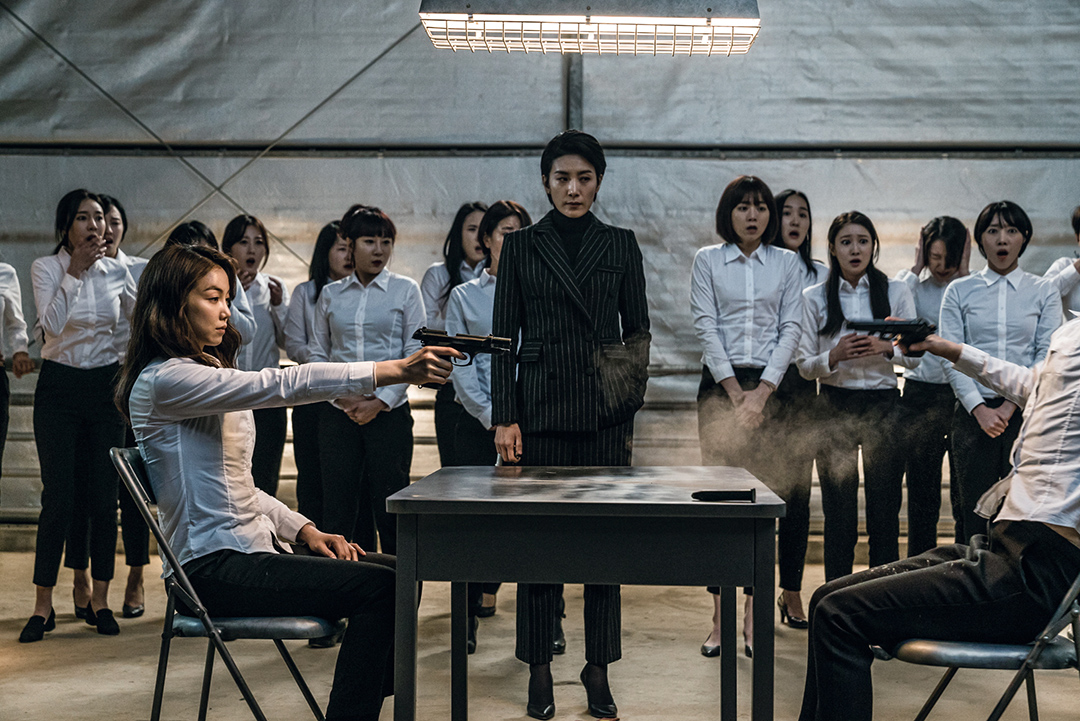
Korea Portal, has reported Korean action-thriller The Villainess was given “a rousing applause that lasted for four minutes” at the 2017 Cannes Film Festival. Korean Film Noirs have always been at the heart of the Korean cinema rennaissance and year over year, the quality of the stories as well as their production value have steadily increased to the point of arguably rivaling  fare from America or Europe.

As if echoing this, England’s ‘The Daily Mail’ published an interview with The Villainess director, Jung Byung-Gil, titled “Why Korea’s ‘film noir’ movies are wowing Cannes” which also traces the roots of the genre’s foothold in Korea, linking it to historical scandals and sensational crimes throughout Korea’s post-war history.

In our interview with Miyazaki Daisuke, he expresses his hope to one day help create a “J-Noir” movement in Japan through mid-budget movies. Though he sees the post-Bubble Era gloom as well as post-Great East Japan Earthquake anxiety as emotions which can be tapped into for material, The Daily Mail article and Korea’s success also reveal the challenges ahead. Firstly, film noir has taken off in Korea, a fact Miyazaki points out himself, whereas it has not in Japan. The audience just isn’t there yet. Second, and related to the first, more filmmakers have to want to tackle the true-to-life crimes and scandals that are at the very heart of film noir. The dark underbelly of society is the sustenance on which the genre thrives. And while Japan is certainly not free of sensational crimes or scandals, filmmakers, especially the major studios, have been reluctant to deal with them, at least as “Film Noir”; family or courtroom dramas, yes, but rarely morally dark, thrillers. Those which have attempted to do so have been low-budget, independent movies which barely attract enough audience attention much less societal appreciation. Even more odd are the movies which actually criticize the victims of the crimes or scandals. However, Miyazaki is aware of the trend and understands that to create a J-Noir will require bigger budgets than the usual Japanese indie movies and a courage to be both topical yet entertaining, just like the film noirs of Korea.
Read more about what he has to say regarding J-Noir among other topics in our interview here

Kikuchi Takeo

Blog
Kikuchi-Takeo-AsianFilmVault-Interview

I don’t believe all Japanese independent films are of that style. Personally, I don’t like styles that are too explanatory and over-emotional. The fact that I like classic films have affected my style, I believe. When you trace back the history of cinema, it begins with silent films and films by the Lumière brothers where the picture said it all. That is why I now produce and think of ways of how I can use pictures and sounds to convey information that may stimulate and inspire the imagination of the audience. On the other hand, the budget of Japanese films is surprisingly low, so the reality is that we need to come up with ideas under limited circumstances. I do hope that one of these days, I can create a film with a very large budget that is fast-paced, unrealistic, and filled with music.


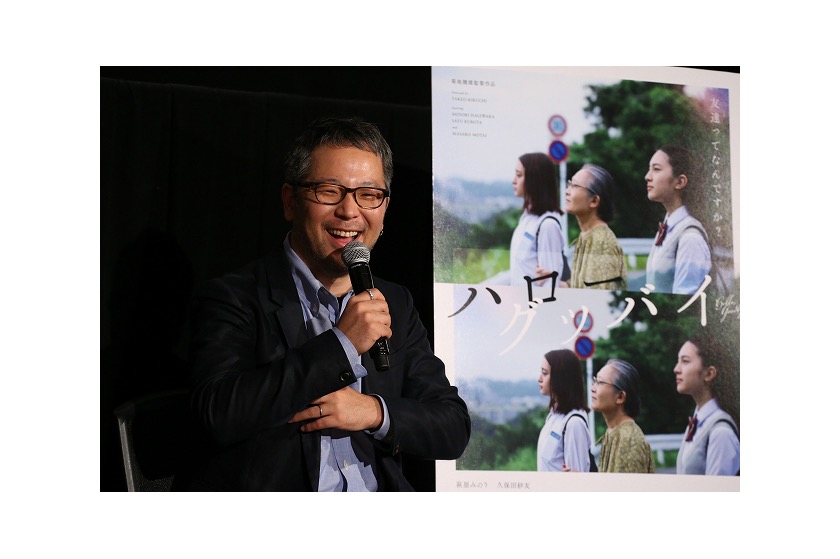
Kikuchi Takeo made an impressive debut with his movie, Dear Deer. His follow-up is Hello Goodbye which tackles contemporary issues facing Japanese society. Asian Film Vault asked him why he chose the “typical” Japanese indie style of “…relatively slow pace, not so much dialogue, lack of music, focus on realism and attention to detail)” to tell his tale. Movies are fundamentally a visual medium and the classic rule of thumb is: “always show rather than tell.” Kikuchi has made a conscious decision to employ this minimalistic style because it is his preferred method; those types of movies have served as his inspiration. But the problem is when said style becomes symptomatic of Japanese independent film and the cause, as Kikuchi mentions, is filmmakers doing so because of their budget restraints rather than any creative choice. Or in other words, Japanese independent filmmakers have become accustomed, perhaps even resigned, to envisioning movies which will fit into those constraints rather than thinking of stories which strive to expand beyond them. Kikuchi, himself, hopes to create a movie which affords him the opportunity to break from his usual style. I don’t think he is alone.

Check out the rest of the excellent interview by Asian Film Vault here.

King Kong and Kojima

Blog
Kong-Kojima-Feature

Jordan Vogt-Roberts, the 32-year-old director of Kong: Skull Island is a deeply passionate and vocal proponent of video games, frequently referencing them in interviews, much to the confusion of a large part of the movie press. Growing up with classic games and citing influences as diverse as Treasure’s frenetic shooters like Radiant Silvergun along with the majority of the Dreamcast back-catalog, he’s part of a new generation of creatives for which games are deeply significant. He once noted that that famous Nintendo composer Koji Kondo was an influence on his critically-acclaimed 2013 film The Kings Of Summer, and has since expressed his passion for the Metal Gear series by fighting tooth-and-nail for the opportunity to turn it into a movie.

Vogt-Roberts is a growing number of young, upcoming directors who have been influenced by other mediums of storytelling besides just cinema. He talks about Ben Whitley drawing on the feel of the Counter-Strike games for his latest, Free Fire, and it’s clear Joe Cornish drew upon a childhood spent playing games for Attack the Block. These directors don’t want to make video game movies per se (though the interview with Vogt-Roberts is specifically about his assignment to a Metal Gear Solid adaptation), but it is how the video game experience–the physical and emotional investment exerted to affect a story’s outcome over many more hours than a movie–provides the touchstones essential to their creative expression.

However, it’s important to note that just as they are changing the visual language of movies based on their love of video games, it was movies which influenced many of their favorite Japanese video game creators such as Kojima Hideo. Kojima’s love and knowledge of movies, as noted in the interview, is well-known. Yet, he doesn’t turn identifiable movies into video games (though the criticism has been leveled on the Metal Gear series). Instead, the cinematic language informs his decisions about plot, character and thematic development, and obviously production design and camera work. Over the years it has become increasingly apparent games with deeper storylines are becoming the norm, perhaps vindicating Kojima. So, it is interesting to see how he and other Japanese video game creators have impacted the way directors such as Vogt-Roberts are approaching their craft today.

He explains a lot more during his interview with Glixel.

Reading Tea Leaves

Blog

Now that a month has passed since the site went live, I thought I’d share some interesting observations from the site’s statistics and how these may (or may not) guide the operation of the site moving forward.

After the soft launch, the site obviously experienced an Everest-ian spike in views and visits after announcing the launch on Facebook. The interview with the lion’s share of views was Miyazaki Daisuke’s who had linked to his it through his personal Facebook and Twitter, as well as from the social media accounts of his latest movie which directed his large follower base to the site. Other filmmakers such as Tanaka Jun also linked to the report on the Osaka Asian Film Festival in which his movie was mentioned. From there, the site experienced a dramatic dropoff in the following days afterward, with smaller spikes as other filmmakers mentioned their articles or friends shared the announcement on their social media sites. Overall, the traffic has been steady with 5-50 visits thereafter with a few days of no visits at all. This isn’t particularly disappointing or thrilling news, just interesting…

Read More